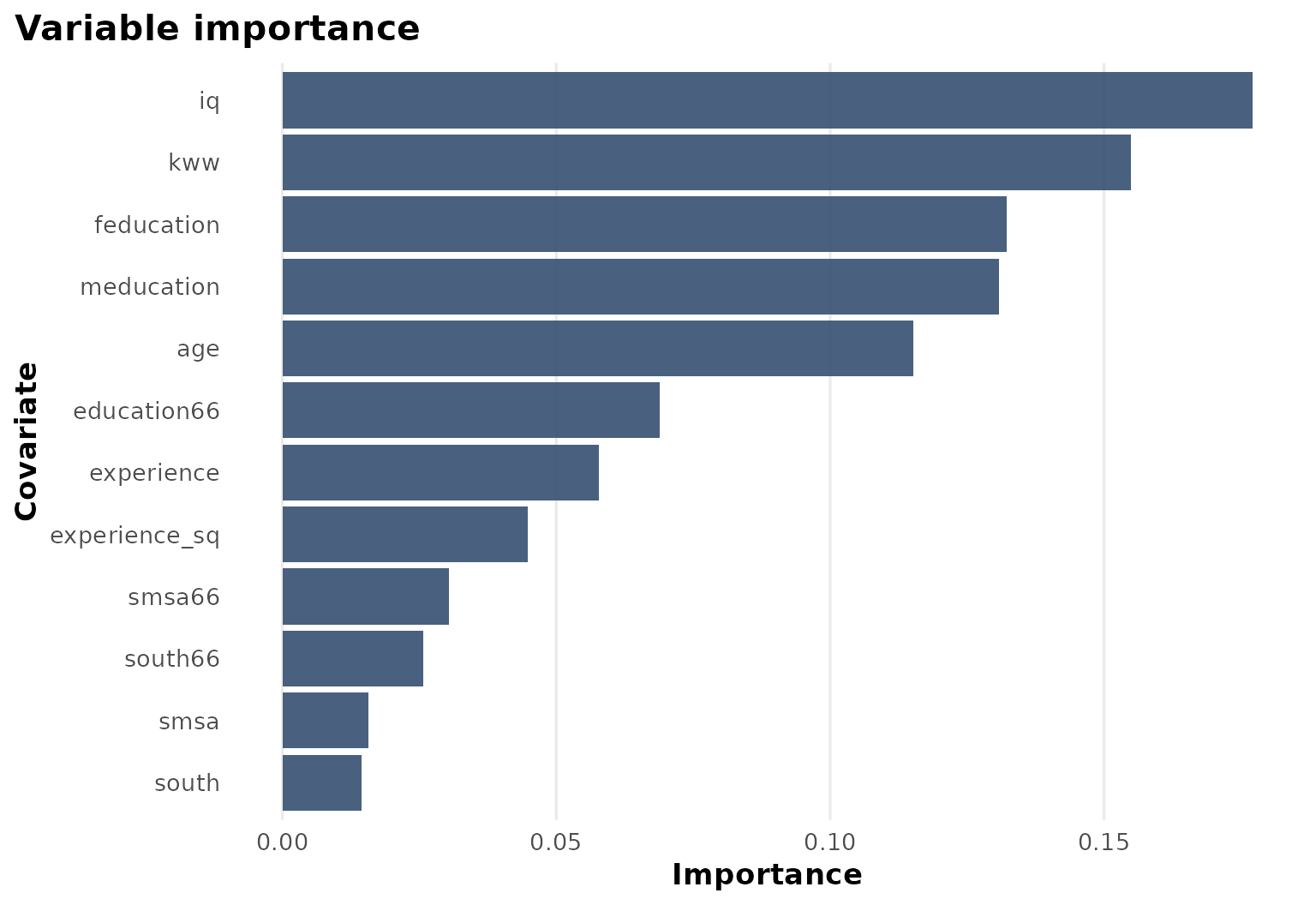
Case Study: SchoolingReturns
Source:vignettes/case-study-schooling-returns.Rmd
case-study-schooling-returns.RmdBackground
ivreg::SchoolingReturns is another returns-to-schooling
dataset with college proximity instruments and a richer collection of
baseline socioeconomic covariates than the simpler Card example.
Objective
The purpose of this tutorial is to show the same IV workflow on a higher dimensional baseline space. The estimand is the subgroup-specific local IV effect of education on log wages.
Analysis setup
dat <- prepare_case_schooling_returns()

fit <- fit_instrumental_forest(
  data = dat,
  outcome = "outcome",
  treatment = "treatment",
  instrument = "instrument",
  covariates = setdiff(names(dat), c("sample_id", "outcome", "treatment", "instrument")),
  sample_id = "sample_id",
  seed = 123,
  num_trees = 400,
  tree_minbucket = 80
)
#> Warning in get_scores.instrumental_forest(forest, subset = subset,
#> debiasing.weights = debiasing.weights, : The instrument appears to be weak,
#> with some compliance scores as low as -0.1058

fit$check_table
#>                 check_name        value status
#> 1                rows_used 2.033000e+03   info
#> 2     rows_dropped_missing 0.000000e+00     ok
#> 3               outcome_sd 4.177972e-01     ok
#> 4             treatment_sd 2.275749e+00     ok
#> 5            instrument_sd 4.551006e-01     ok
#> 6 cor_treatment_instrument 9.353879e-02     ok
#> 7            first_stage_f 1.792710e+01     ok
fit$subgroup_table
#>   subgroup                                                 rule   n effect_mean
#> 1       G1         south66< 0.5 & meducation>=10.12 & kww< 30.5 121  -0.3156606
#> 2       G3 south66< 0.5 & meducation< 10.12 & education66>=10.5 174   0.2716612
#>   effect_low effect_high
#> 1 -3.1901339    2.558813
#> 2  0.1961033    0.347219
Design view
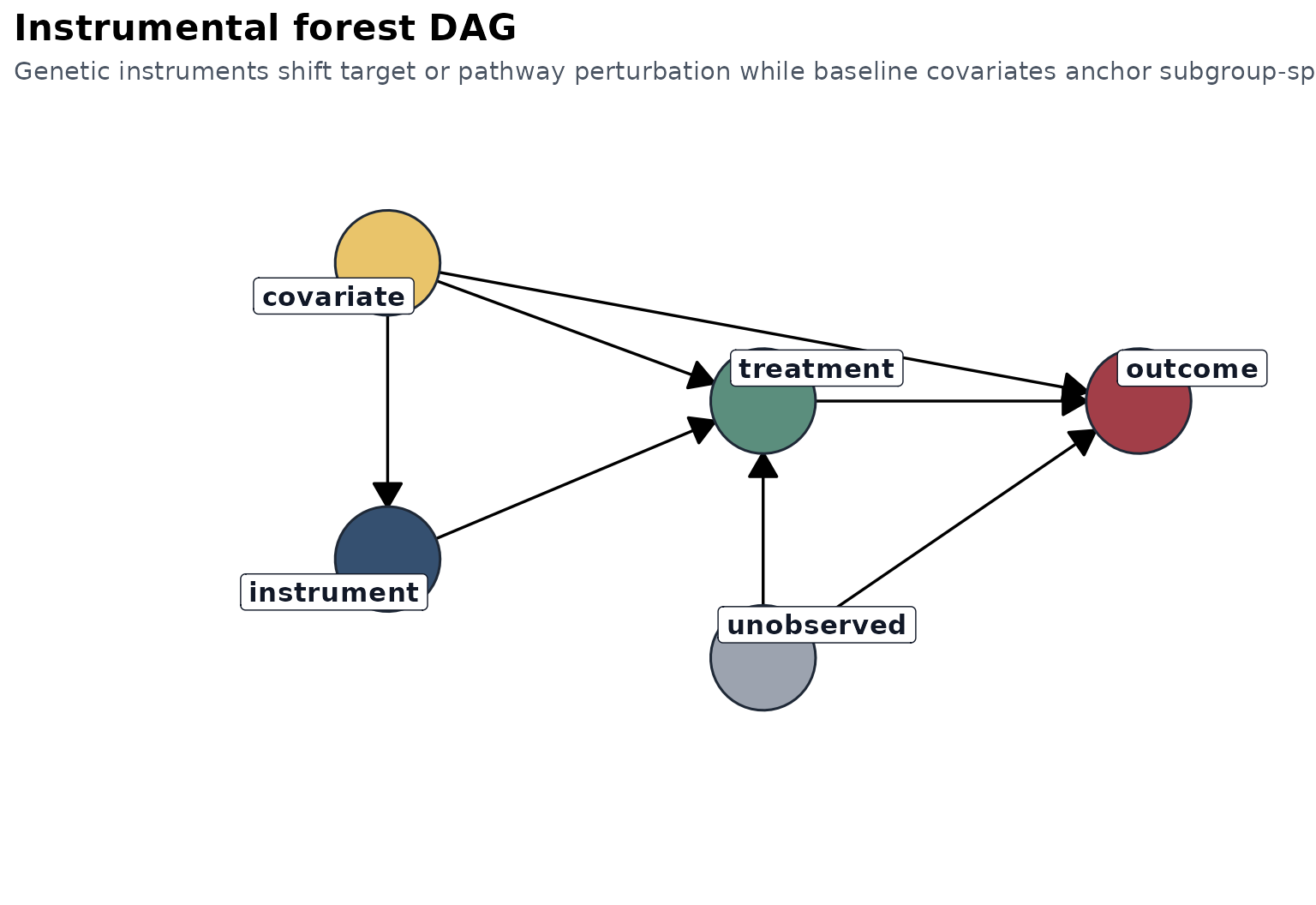
The DAG is the same IV logic as in the Card example, but the baseline covariates now allow a more detailed heterogeneity decomposition.
First stage
plot_first_stage(fit)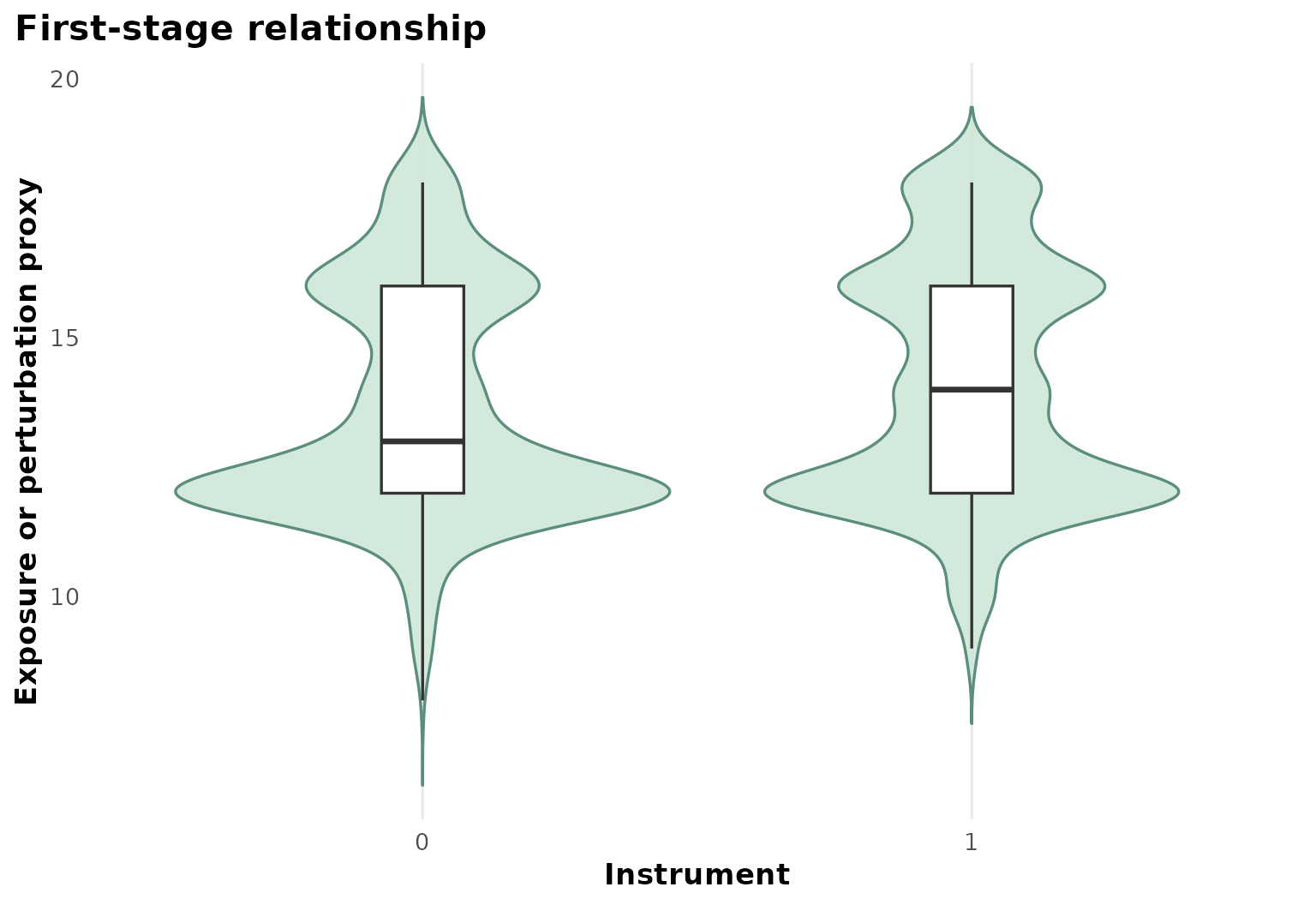
The first-stage panel shows the instrument-exposure link at the analysis-table level.
Reduced form
plot_reduced_form(fit)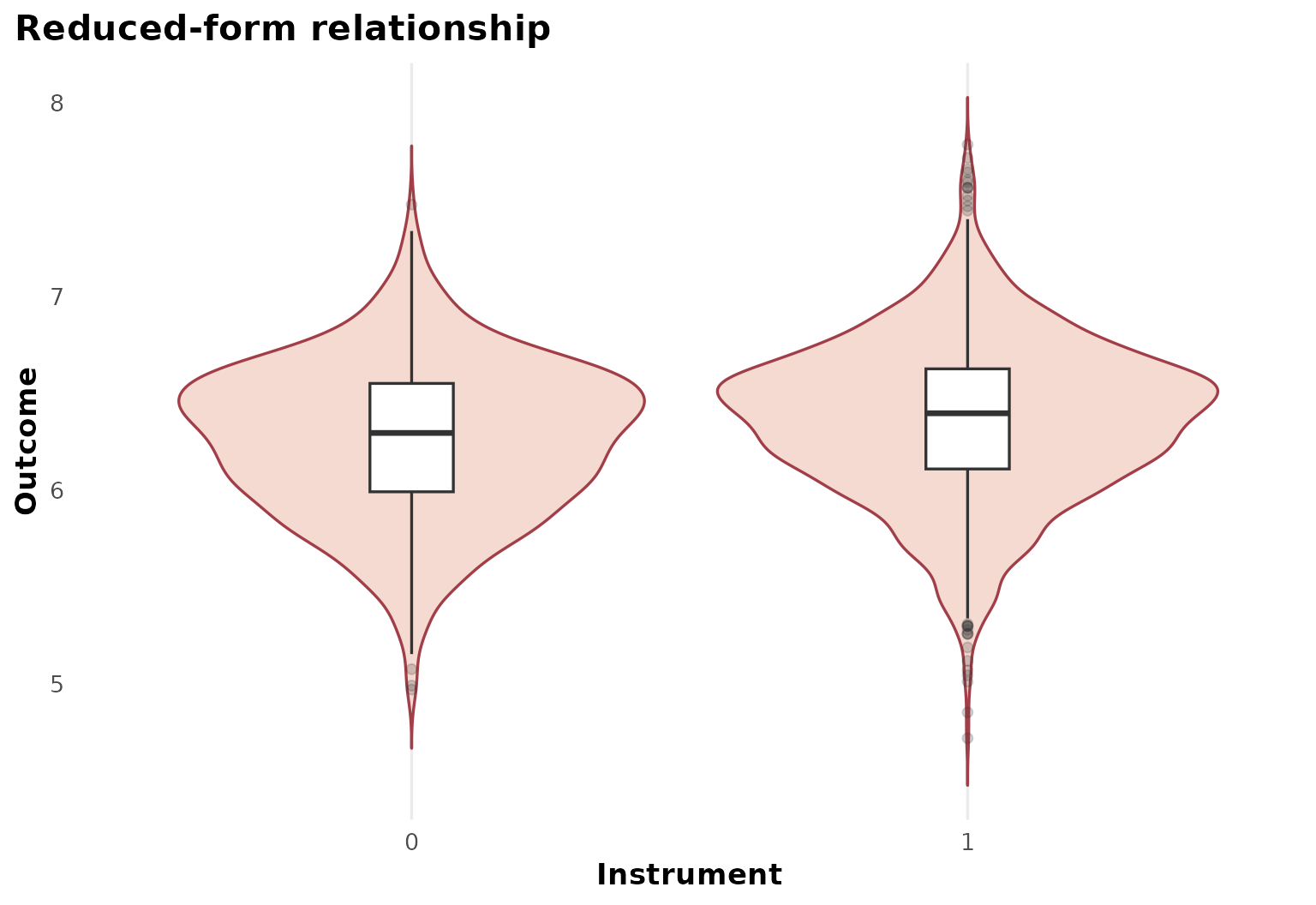
The reduced-form panel complements the first stage by showing the instrument-outcome relationship.
Heterogeneous effect summary
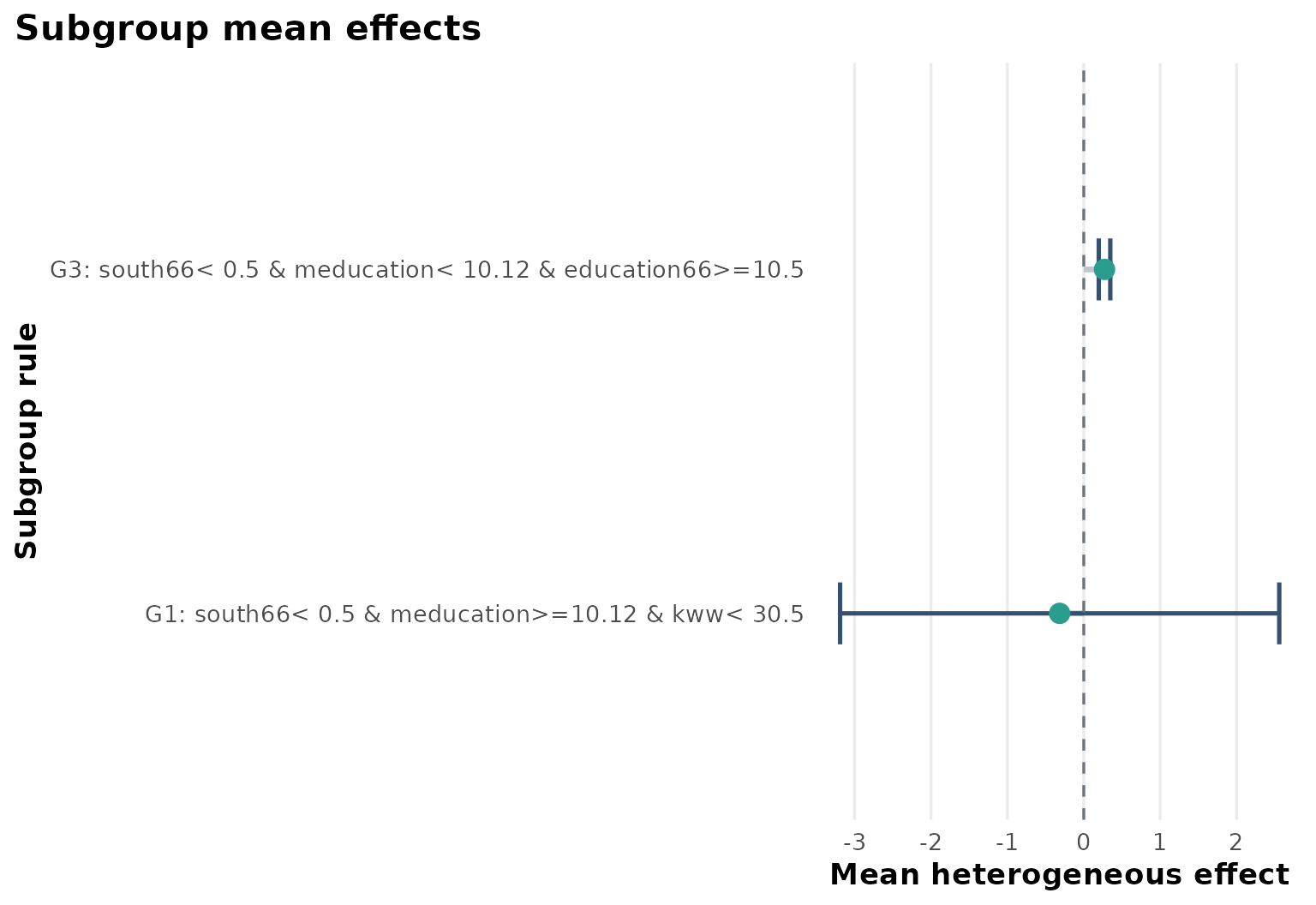
The subgroup plot suggests that local IV effects differ across baseline family education and cognitive-score profiles.
Explanation tree
plot_effect_tree(fit)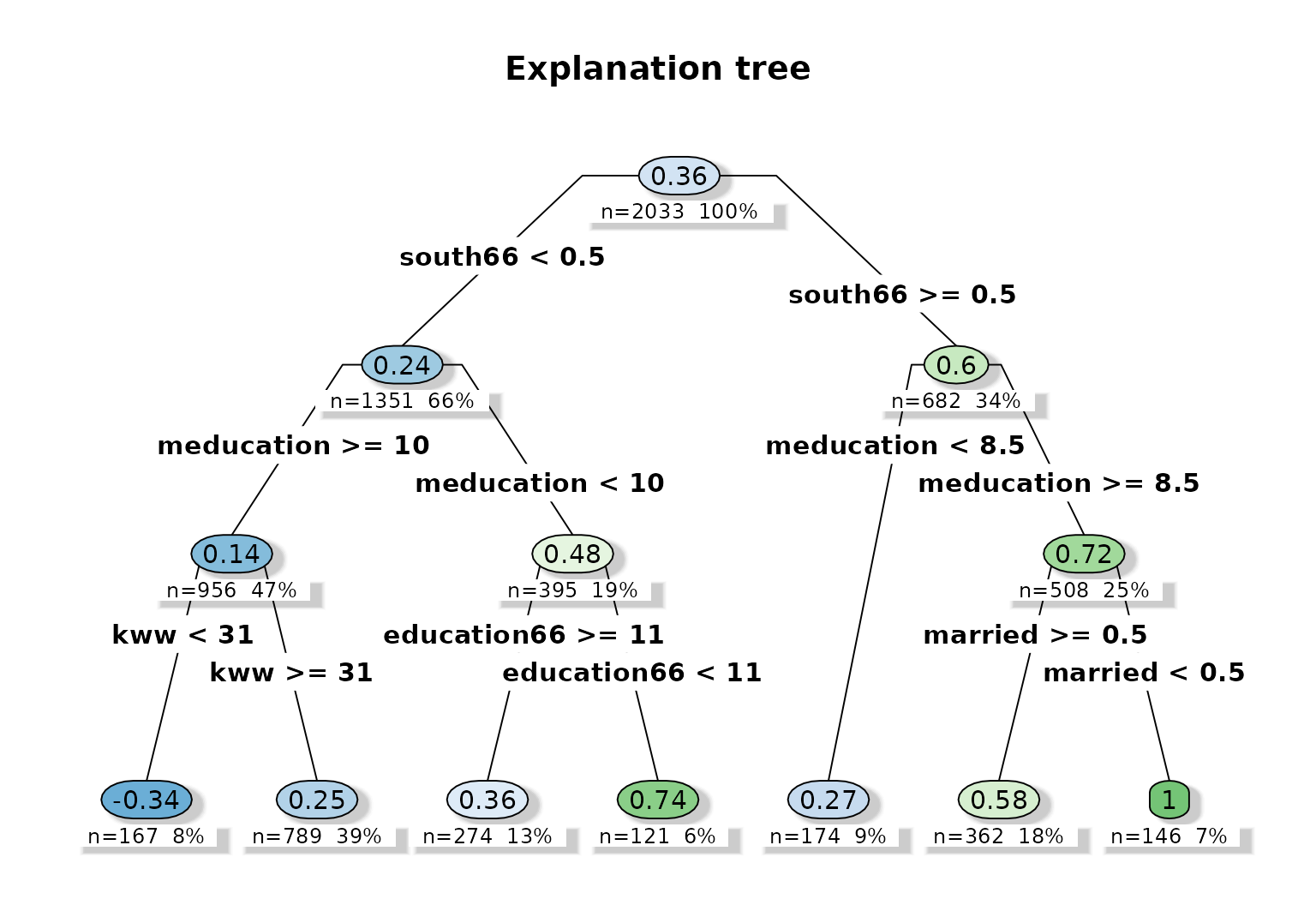
The explanation tree turns the forest predictions into readable rules. In this example, parental education, baseline schooling, and measured skill variables all contribute.