
Background
causaldata::nsw_mixtape is a standard program-evaluation
dataset built around the National Supported Work training program. It is
widely used in causal inference tutorials because treatment is binary,
outcomes are economically meaningful, and baseline heterogeneity is
plausible.
Objective
The question here is whether the earnings benefit of job training differs by pre-treatment labor-market history and demographic background.
The estimand is again:
where is post-program earnings and is program participation.
Analysis setup
dat <- prepare_case_nsw()

fit <- fit_observational_forest(
  data = dat,
  outcome = "outcome",
  treatment = "treatment",
  covariates = setdiff(names(dat), c("sample_id", "outcome", "treatment")),
  sample_id = "sample_id",
  seed = 123,
  num_trees = 400,
  tree_minbucket = 50
)

fit$check_table
#>             check_name        value status
#> 1            rows_used  445.0000000   info
#> 2 rows_dropped_missing    0.0000000     ok
#> 3           outcome_sd 6631.4916806     ok
#> 4         treatment_sd    0.4934022     ok
#> 5       treatment_rate    0.4157303   info
#> 6      covariate_count   12.0000000   info
fit$subgroup_table
#>   subgroup                   rule   n effect_mean effect_low effect_high
#> 1       G1  age< 24.5 & educ< 9.5 148    1293.561   1210.623    1376.498
#> 2       G3 age>=24.5 & educ< 10.5  94    1728.480   1632.111    1824.848
#> 3       G4 age>=24.5 & educ>=10.5 124    2947.757   2823.516    3071.998
Design view
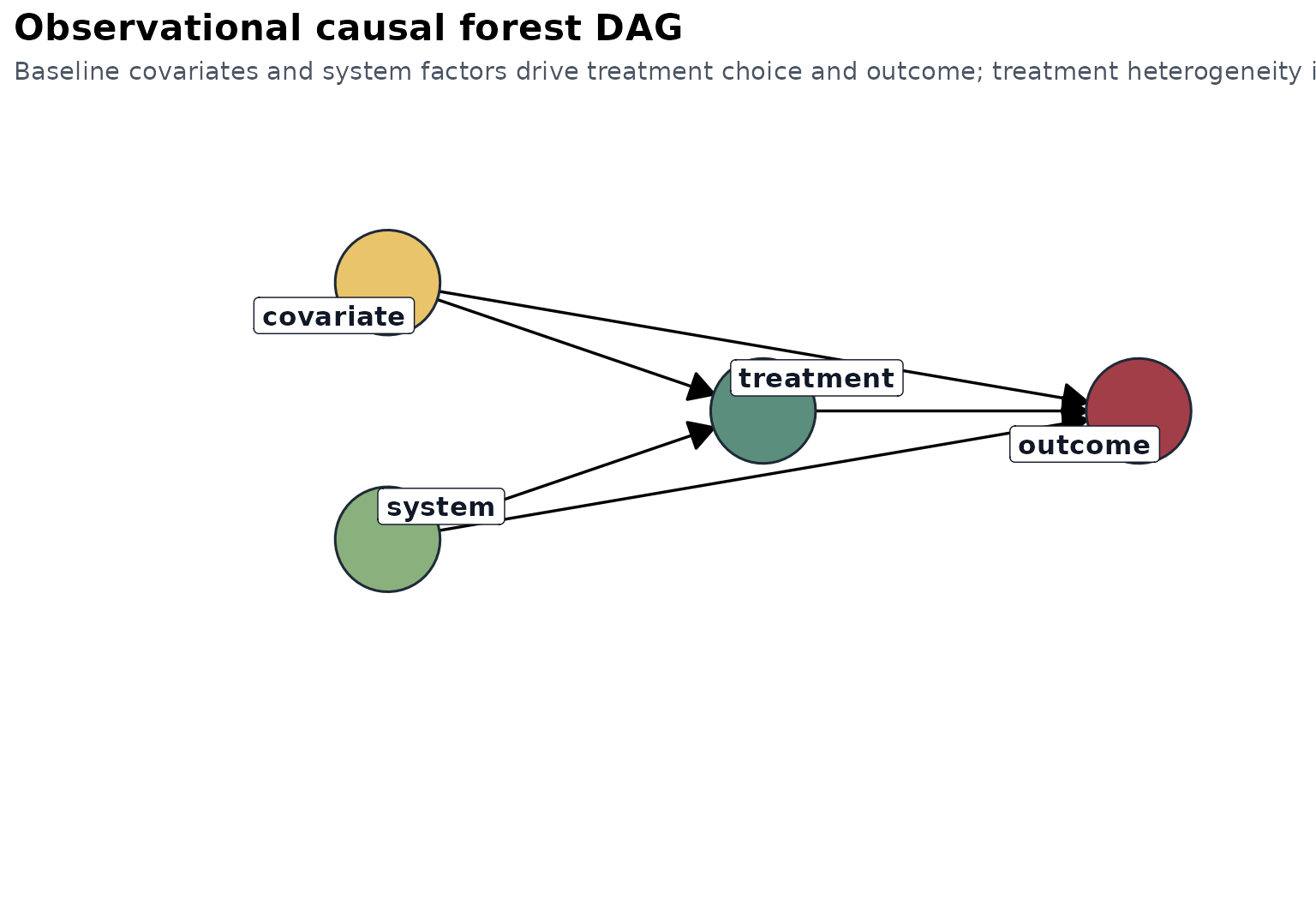
In this tutorial, the DAG emphasizes baseline confounding by age, education, marital status, and lagged earnings history.
Treatment and outcome pattern
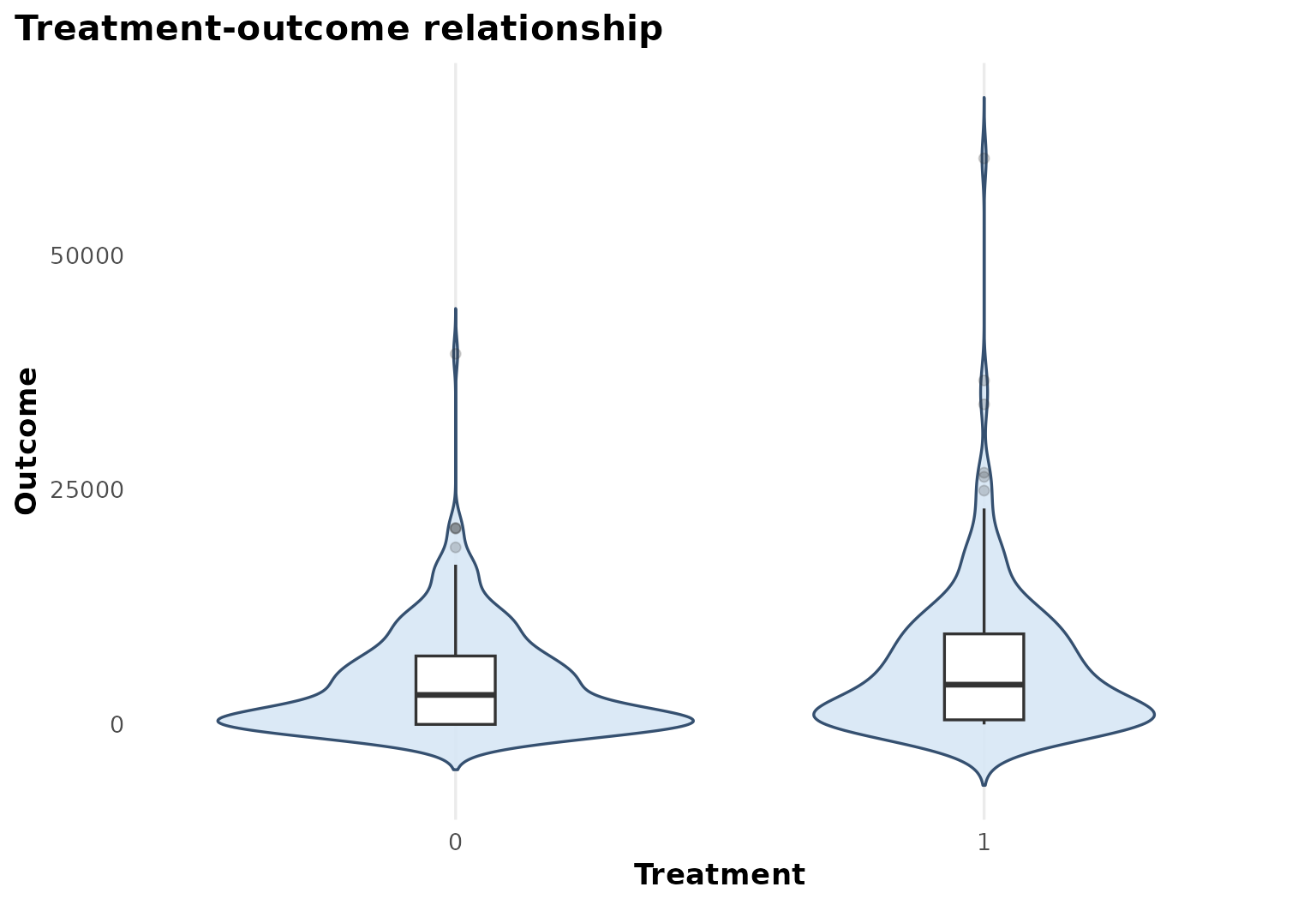
The raw treatment-outcome view gives the scale of the earnings outcome and helps contextualize the subgroup-specific effect estimates.
Heterogeneous effect summary
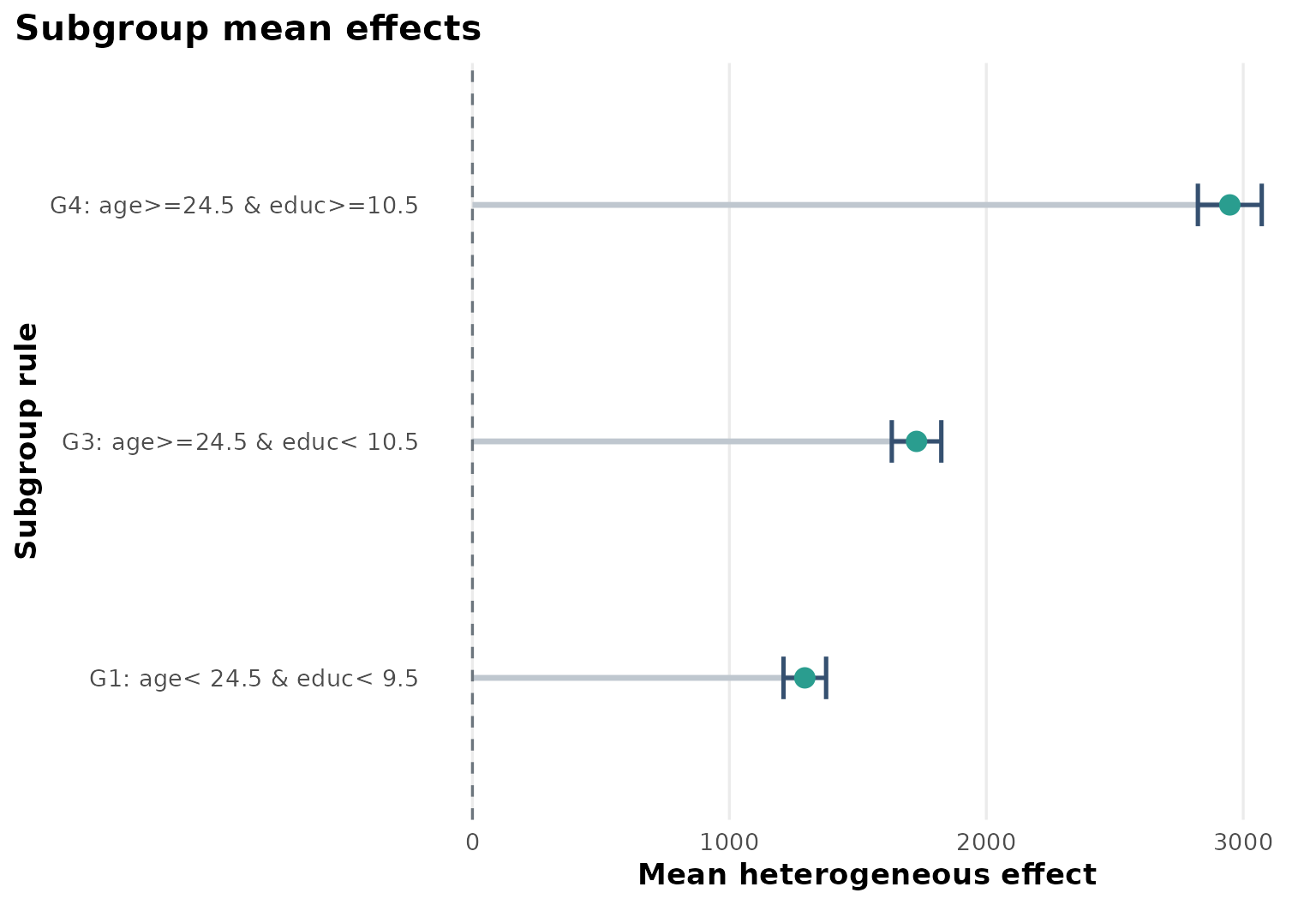
The subgroup summary shows a clear gradient: older and more educated strata in this analysis tend to have larger predicted earnings gains than the youngest, least educated stratum.
Explanation tree
plot_effect_tree(fit)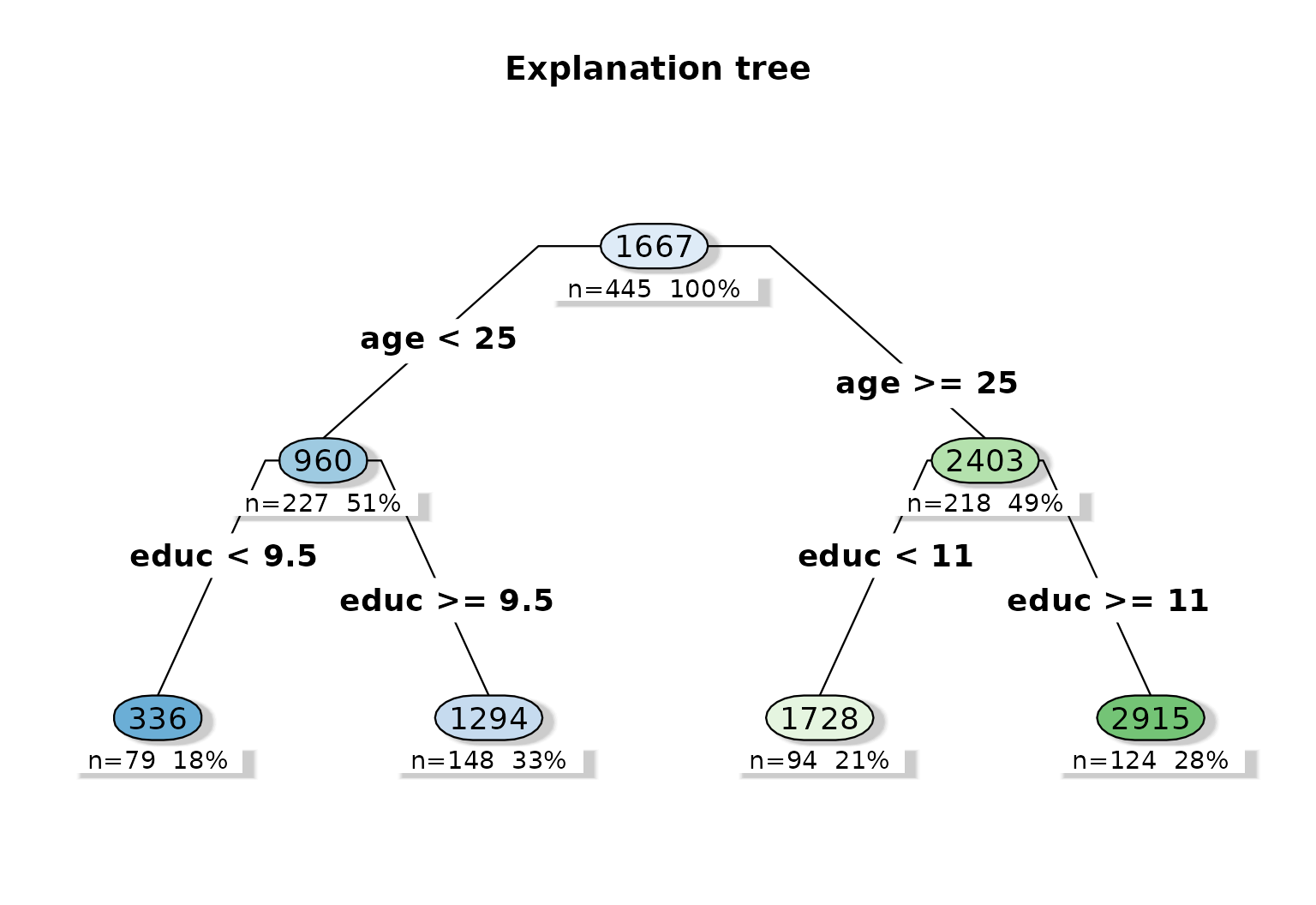
The explanation tree provides a readable program-evaluation story. Age and education dominate the first splits, which aligns with an economic hypothesis that labor-market readiness modifies the returns to training.
Variable importance
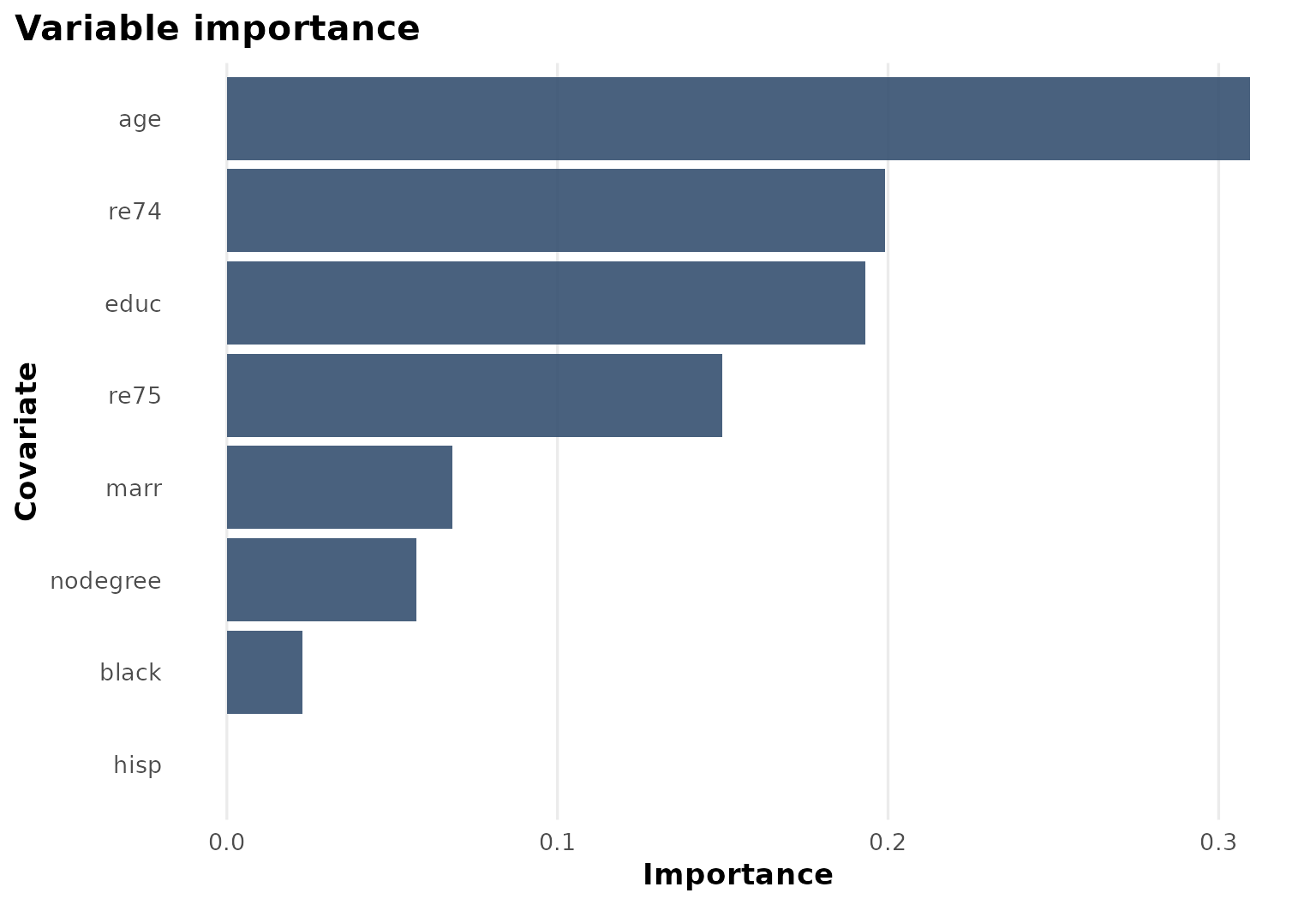
Lagged earnings also appear among the leading variables, which is consistent with the idea that pre-program attachment to the labor market helps organize treatment heterogeneity.